X Finance Bull
Home
About
Shop
Experts
Leaderboard
Login
Navigation
  • Home
  • About
  • Shop
  • Contact Us
  • Experts
  • Courses
Legal
  • Terms of Service
  • Privacy Policy
Contact
  • admin@xfinancebull.com
Curriculum
  • Courses
© 2026 X-Finance Bull. All Rights Reserved.
TermsPrivacy
XFB Academy
XFB Academy
BTC
$67,234.50
2.34%
ETH
$3,456.78
1.89%
SOL
$94.60
0.89%
USDC
$1.00
0.01%
BNB
$584.32
1.23%
XRP
$0.52
0.45%
BTC
$67,234.50
2.34%
ETH
$3,456.78
1.89%
SOL
$94.60
0.89%
USDC
$1.00
0.01%
BNB
$584.32
1.23%
XRP
$0.52
0.45%

What Is Blockchain:A Beginner's Guide to Blockchain Technology

What Is Blockchain?

A blockchain is a digital ledger that records transactions in a series of connected data blocks.

Each block contains a list of transactions and is linked to the previous block using cryptographic hashing. This creates a continuous and secure chain of records that is extremely difficult to alter.

Unlike traditional databases controlled by a single organization, blockchain operates across decentralized networks where multiple participants maintain and verify the data. This structure enables trust between parties who may not know each other, without relying on a central authority.

Immutable Records

Once data is recorded on a blockchain, altering it becomes extremely difficult. Each block is linked using cryptographic hashes, so changing one block would require modifying every block that follows — making the entire chain tamper-resistant by design.
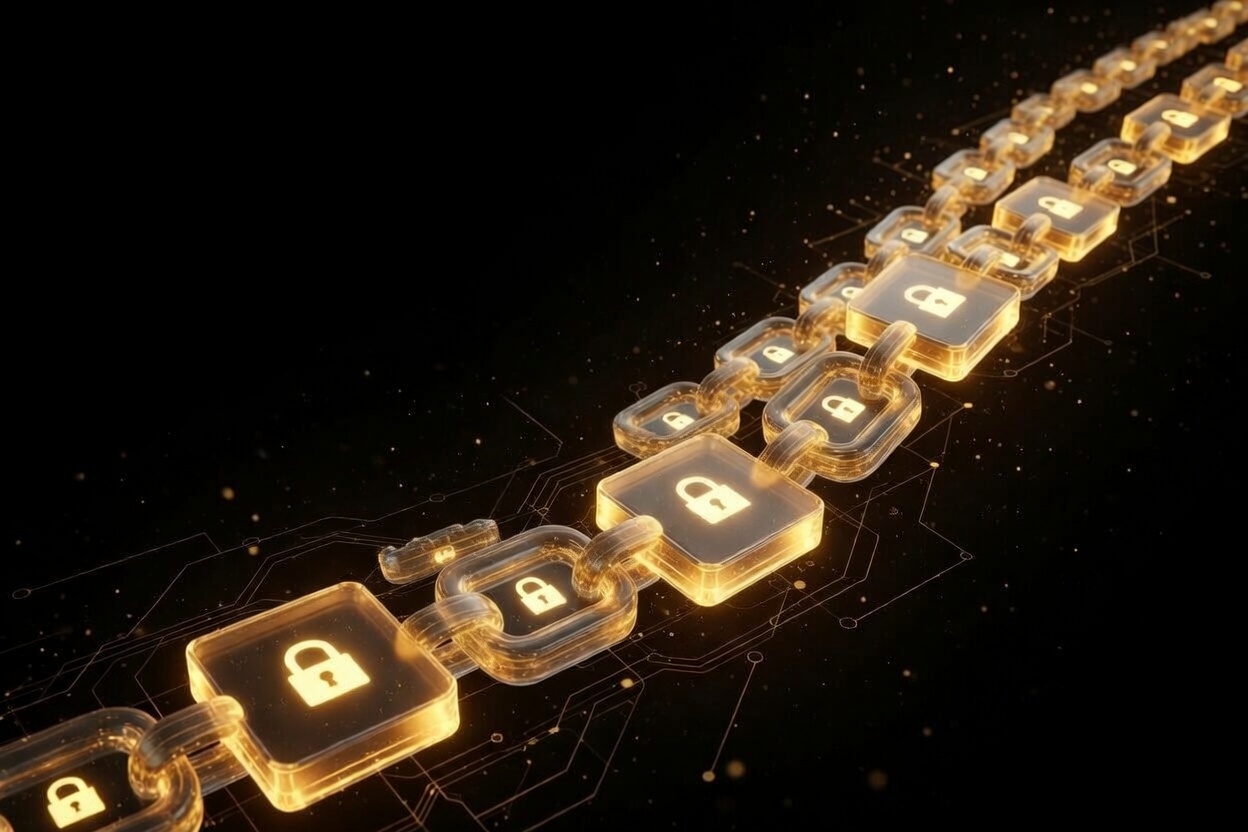
Blockchain technology chain with cryptographic locks

How BlockchainTechnology Works

When a user submits a transaction to a blockchain network, it is broadcast to the network of participating computers for validation and recording.

Transaction Data

Transaction Data

Information about the transfers or actions recorded in each block on the network.

Block Hash

Block Hash

A unique cryptographic identifier that secures each block and makes tampering detectable.

Previous Block Hash

Previous Block Hash

Links each block to the preceding one, creating a secure and continuous chain.

Network Validation

Network Validation

Participating computers validate transactions and confirm compliance with network rules.

Real World Applications

Although blockchain technology originally gained popularity through cryptocurrency networks, it now supports many real-world applications.
1
Payments Infrastructure
Blockchain systems can enable fast and efficient cross-border payments across global networks.
2
Tokenized Assets
Real-world assets such as real estate and commodities can be represented digitally on blockchain.
3
Supply Chain Tracking
Companies can record product movement and verify authenticity using blockchain ledgers.
4
Digital Identity
Blockchain technology can help manage identity verification without centralized databases.
5
Decentralized Finance
Financial services such as lending and trading can operate directly on decentralized networks.
6
Financial Infrastructure
Distributed ledger technology can support real-world financial services and settlement systems.
1
Payments Infrastructure
Blockchain systems can enable fast and efficient cross-border payments across global networks.
2
Tokenized Assets
Real-world assets such as real estate and commodities can be represented digitally on blockchain.
3
Supply Chain Tracking
Companies can record product movement and verify authenticity using blockchain ledgers.
4
Digital Identity
Blockchain technology can help manage identity verification without centralized databases.
5
Decentralized Finance
Financial services such as lending and trading can operate directly on decentralized networks.
6
Financial Infrastructure
Distributed ledger technology can support real-world financial services and settlement systems.
1
Payments Infrastructure
Blockchain systems can enable fast and efficient cross-border payments across global networks.
2
Tokenized Assets
Real-world assets such as real estate and commodities can be represented digitally on blockchain.
3
Supply Chain Tracking
Companies can record product movement and verify authenticity using blockchain ledgers.
4
Digital Identity
Blockchain technology can help manage identity verification without centralized databases.
5
Decentralized Finance
Financial services such as lending and trading can operate directly on decentralized networks.
6
Financial Infrastructure
Distributed ledger technology can support real-world financial services and settlement systems.

Distributed Ledger Technology

1

No Single Control

No single entity owns or controls the ledger

2

Shared Verification

Multiple participants confirm transactions

3

Network Resilience

The system continues operating even if some nodes fail

4

Trust Without Trust

Participants who may not know each other can share reliable records

Distributed ledger technology allows participants who may not trust each other to share a reliable record of transactions.

Why Blockchain Is Considered Secure

Security is one of the most important features of blockchain systems. Several mechanisms work together to create a highly tamper-resistant system.

Cryptographic Hashing

Each block contains a unique hash. Even a small change produces a completely different hash, making tampering easy to detect.

Network Verification

Before transactions are recorded, the network verifies compliance with the system's rules.

Chain Structure

Blocks are connected in sequence. Altering one block would require altering every block that follows it.

Distributed Architecture

The ledger exists across many computers rather than a single database, preventing single points of failure.

Public Vs Private Blockchains

Blockchain networks can be categorized based on how participants interact with them.

Public Blockchains

Allow anyone to participate, view the ledger, submit transactions, or run a node. Prioritize transparency and decentralization.

Private Blockchains

Restrict participation to approved organizations. Often used by businesses for internal systems and controlled environments.

What is Blockchain

A decentralized ledger that records transactions transparently and permanently.

Blockchain is a shared digital ledger that records transactions across a network of computers. Once data is written to the chain, it cannot be altered or deleted. This makes blockchain one of the most transparent and tamper-proof systems ever built, with applications far beyond cryptocurrency.

Your browser does not support the video tag.

Continue Learning

Explore these guides to understand blockchain technology in depth.

Learn Blockchain

Smart Contracts

April 1, 2026•8 min read
Learn Blockchain

Proof of Stake

April 1, 2026•9 min read
Learn Blockchain

Layer 2 Scaling

March 31, 2026•8 min read
Learn Blockchain

Layer 1 Blockchain

March 31, 2026•8 min read
Learn Blockchain

Distributed Ledger Technology

March 31, 2026•7 min read
Learn Blockchain

Blockchain Validator

March 31, 2026•8 min read
Learn Blockchain

Blockchain Governance

March 31, 2026•8 min read
Learn Blockchain

Blockchain Consensus

March 31, 2026•8 min read
Learn Blockchain

Proof of Work

March 31, 2026•8 min read
Learn Blockchain

Blockchain Security

March 31, 2026•7 min read
Learn Blockchain

Blockchain Nodes

April 1, 2026•7 min read

Frequently Asked Questions

Ready to Get Started?

Join thousands of students transforming their financial future today.

Enroll Now
View Pricing